“May You Live in the Times of Great Changes” — from the Chinese point of view, these words sound like a curse.
(English equivalent – “May You Live in Interesting Times”– Transl.)
For the European mentality, this expression can be perceived differently, in particular, as the death of the old and the birth of something new, perhaps even better, which will also entail the emergence of new opportunities.
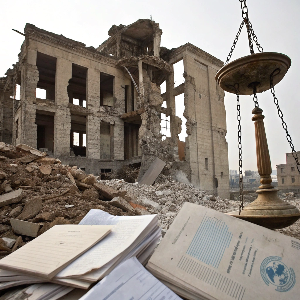
The fact that we are living in times of great changes has already become obvious. The old system of international security and law has been completely destroyed. A vivid confirmation of this is the Russian Federation’s unpunished invasion of Ukraine and the failure of the Budapest Memorandum signatories’ to fulfill its terms. The UN has also proved to be helpless in this situation, and thus – an international organization no longer needed.
Today, it has become clear that the old world is dying, but as the saying goes, “a holy place is never empty”, so we should expect a new world order and a new international security and law system to be born on its ruins.
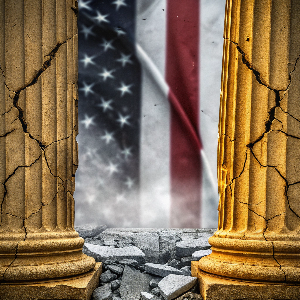 It is hard to say what this new world will look like, but given the foreign policy of the current US President Donald Trump, we can already say for sure that it definitely won’t be American. The United States no longer has the trust that it once had. The withdrawal of American troops, and in fact their flight from Afghanistan, has significantly undermined trust in the United States. The ambiguous current policy of the US government towards its European allies and its rather sluggish reaction to Russia’s armed aggression against Ukraine also raise many questions.
So far, the United States has taken a consistent position only with regard to Israel. A clear confirmation of this is the United States’ military and political support for Israel in its confrontation with Iran.
On the European continent, the United Kingdom is currently Ukraine’s most reliable ally in its war with Russia.
Germany and France have also recently begun to help Ukraine more actively, realizing the consequences of Russian expansion on the European continent.
As for Russia, its goal is clear. Putin and his team seek to restore the power of the Russian Federation, and they do so by expanding their sphere of influence to countries that were once part of the USSR. Russia has already effectively annexed Belarus, significantly strengthened its position in Georgia, and it desperately needs Ukraine to realize its imperial ambitions.
The Kremlin’s future plans include spreading its influence to other European countries, as Russian President Vladimir Putin has openly stated.
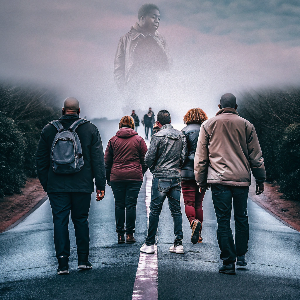 Where are we going and what will our world look like tomorrow? Are we returning to its division into empires with their own spheres of influence, or can globalization lead to the final destruction of nation-states and creation of some new universal world government? Perhaps, over time, another alternative will emerge, where a new system of international relations and law will be created on the basis of a clearer and more balanced regulation of relations between nation-states. Today, no one has a clear answer to all these and many other important questions.
Meanwhile, our lives continue in times of great changes, and the vast majority of people hope for their rapid completion and return to social and political stability and the restoration of lasting peace and order.
Oleh Bereziuk,
Institute of Global Politics